Airport Scanning

The main types of scanning and detection devices currently deployed by international airports are based on traditional X-ray technologies as well as EDS and ETD detection systems.


The Transport Security Administration has made substantial progress in installing ETD and EDS systems at over 4000 airports with the capacity to screen all checked baggage for explosive traces.


These systems were gradually brought into large scale operation after 1973 in response to several high profile plane hijackings and a shift in tactics away from the gun toward the bomb.


Here at EXE we have devised a system that allows us to easily track and manage such threats with ease ensuring a seeming-less process that bring peace to boarders and management of the facility.


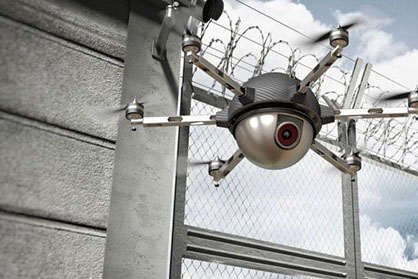
Surveillance & Monitoring Although there are societal considerations relating to privacy linked to the deployment of CCTV cameras more widely, evidently, in airports and other critical infrastructure, it is imperative that improvements are made in monitoring technologies through dynamic and mobile CCTV cameras. Some projects have combined CCTV surveillance with physical recognition software setting out new applications for existing technologies. The view project has played an important role in widening the scope for potential camera networking by demonstrating ways in which advanced computer algorithms can be used to network surveillance cameras and to fuse data between them so as to help track suspicious individuals and items of baggage. However, intelligent and mobile tracking CCTV networks can only form part of the solution and must be weighed against the social, legal and ethical dimensions of surveillance. One project that addresses these concerns are few companies. While utilising breakthrough technologies, the project partners have sought to involve end-users through social dialogue to ensure that technological outcomes meet the needs of society and target beneficiaries.
In-flight security & Air Traffic Management There has been some limited support to fund research on protecting aircraft against ManPad attacks through EXE projects. However, while airlines accept the need to prepare for ‘low probability, high impact events’, they do not believe that installing anti-missile protection on aircraft is viable from a cost perspective. Ground-based protection for aircraft has received limited attention to date, and may need further research in future. Protecting airborne aircraft is the responsibility of ground airport facilities which can best achieve protection by applying a multi-layered security system. The guardian project (EXE) promoted in-flight security by improving collaboration between airport ground and air staff through a system of enhanced operational, procedures, systems and technology. A new generation of integrated Air Traffic Management (ATM) systems will shortly be introduced, with improved coordination between civil aviation authorities on ATM. While this will improve the efficiency and effectiveness of ATM, it brings with it the possibility of new intelligent security threats, such as attack on networked systems and systems of systems.
Quality Access Exe has promoted the development of ‘state of the art’ in particular areas of aviation security. For example, prototype technologies developed through an EXE project have strong potential to improve the surveillance and monitoring of people and luggage in airports through the use of mobile and dynamic CCTV surveillance. The demonstration trials show strong promise and the high level of interest from airport operators suggests that such technology shows real promise in promoting ‘new generation’ solutions to evolving threats. EXE has attracted the participation of a number of leading players in the airline industry and of airport operators. This suggests strong interest from among end-users in the research being undertaken, which in itself is an indicator of research quality. Projects that focused on carrying out early-stage research also appear to have contributed to achieving research excellence in the aviation domain. For example, the TERASEC: Active Terahertz Imaging for Security project has potential over the long-term to bring about a significant evolution in the quality and reliability of detection equipment used in airports. It also has potential health benefits in that it may be safer for the travelling public than the present generation of x-ray technologies.

 Airport Services helps customers to position telescopic gangways, enabling easier passenger embarkation and disembarkation.


The company has revised and adapted its environment, surveillance and operation systems, and uses operation management systems that differ from other handling agents.


It also cooperates with handling equipment providers to improve their designs.

Airport System

AEROSPACE

  • Airport Security Management
  • Airport Security Design
  • System Maintenance
  • System Installation
  • Security Audit
  • Threat Analysis
  • Screening Solutions
  • Facility Management
  • Public Facilities
  • Digital Defence
  • Digital Warning
  • Digital Tracking
Airport

Airport security measures can be grouped into two types; standardized screening techniques, which all passengers must undergo (e.g., baggage X-rays, metal detecting scans); and elevated-risk screening (including pat-downs and strip searches)